
Ongoing Research
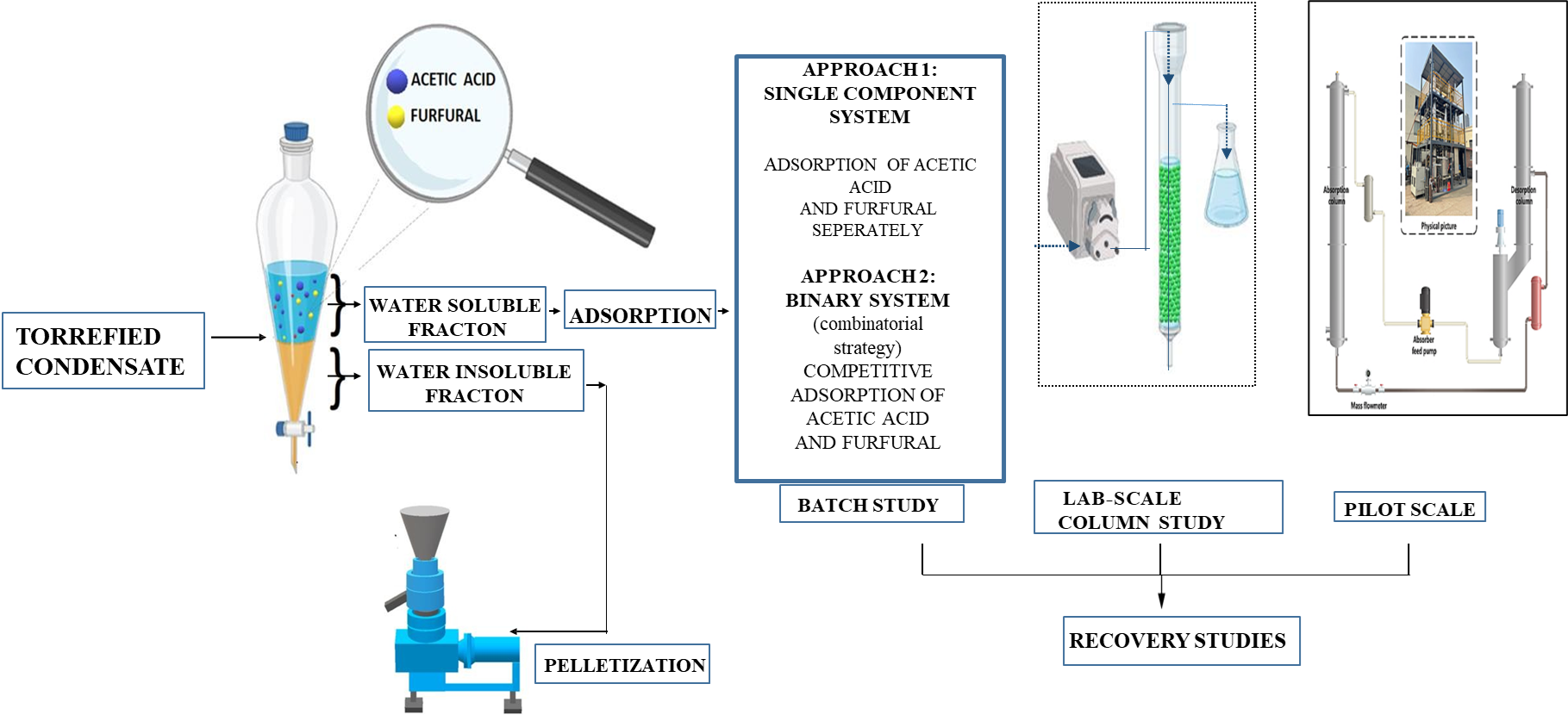
Development of a downstream process for the recovery of Acetic acid and Furfural from the torrefaction process
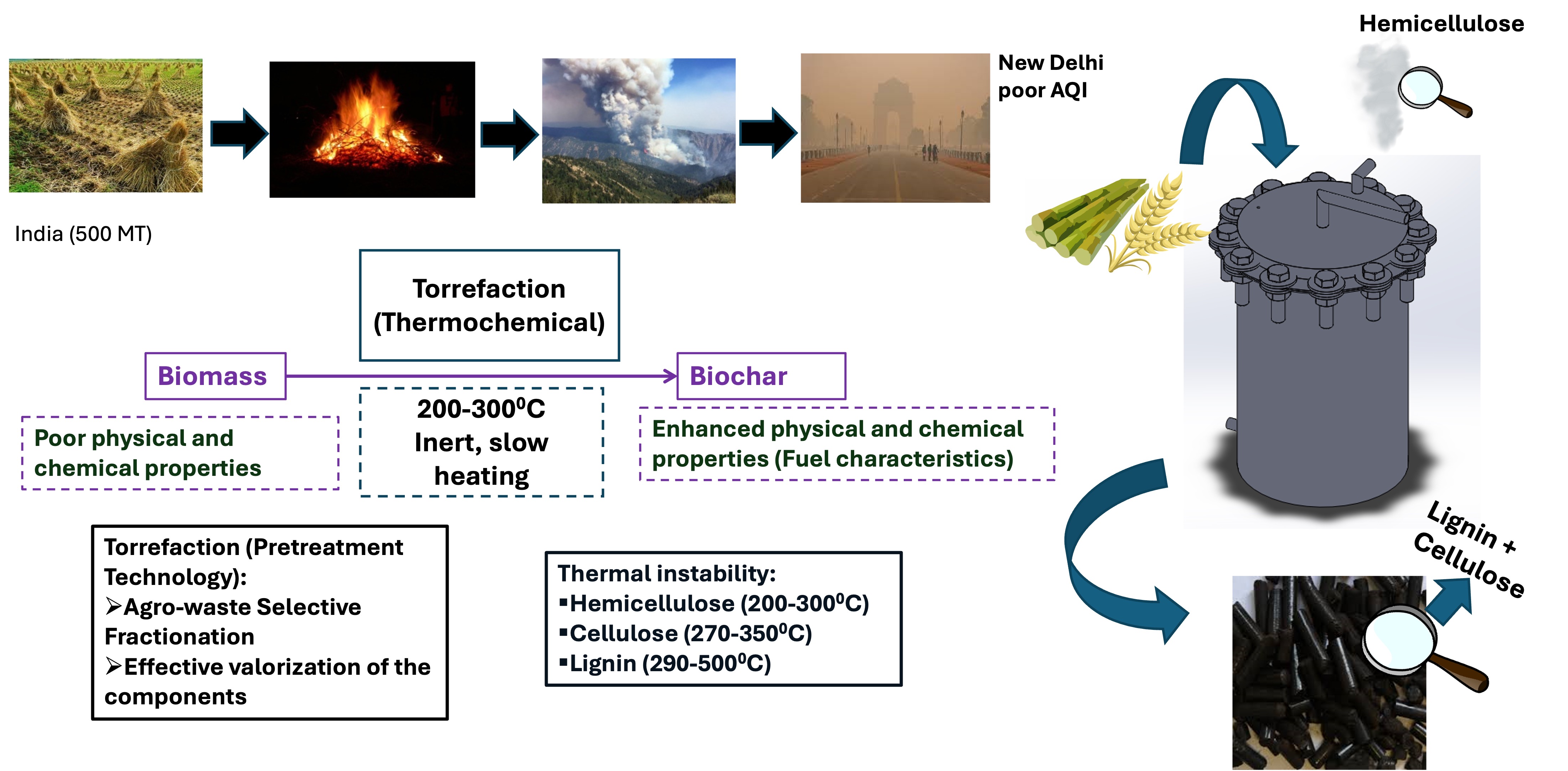
The combustion of agronomic wastes in India depletes a valuable resource and serves as one of the prime factors in the deterioration of air quality. Thermochemical and biochemical conversion processes are advantageous in converting agro-waste into usable products such as biochar, bio-coal, biogas, and ethanol. Torrefaction is a proven methodology that can manage various agricultural wastes. The valorization of the vapors that escape during the torrefaction process is an effective way to increase the economic sustainability of the system. The torrefaction condensates contain many industrially important compounds like acids, aldehydes, alcohols, etc. However, at a commercial scale, torrefaction volatiles is generally combusted. Therefore, the proposed research aims to partition the water-soluble fraction of the condensate from the water-insoluble portions and develop an economically viable and ecologically sustainable process for the recovery of Acetic acid and Furfural. This study proposes to find the best suitable adsorbents and optimized process ( via Batch and Column studies) for efficient separation of Acetic acid and Furfural from the torrefaction condensate. Upon gaining this knowledge, we aim to build a technically sound and cost-effective roadmap for scaling up the recovery of Acetic acid and Furfural from torrefied condensate.
Faculty Associated
Prof. Shaikh Z. Ahammad, Prof. Rohan Jain, Prof. Priyanka Kaushal
Investigation of antibiofilm and antimicrobial properties of serratiopeptidase-derived peptidomimetics against ESKAPEE Pathogens
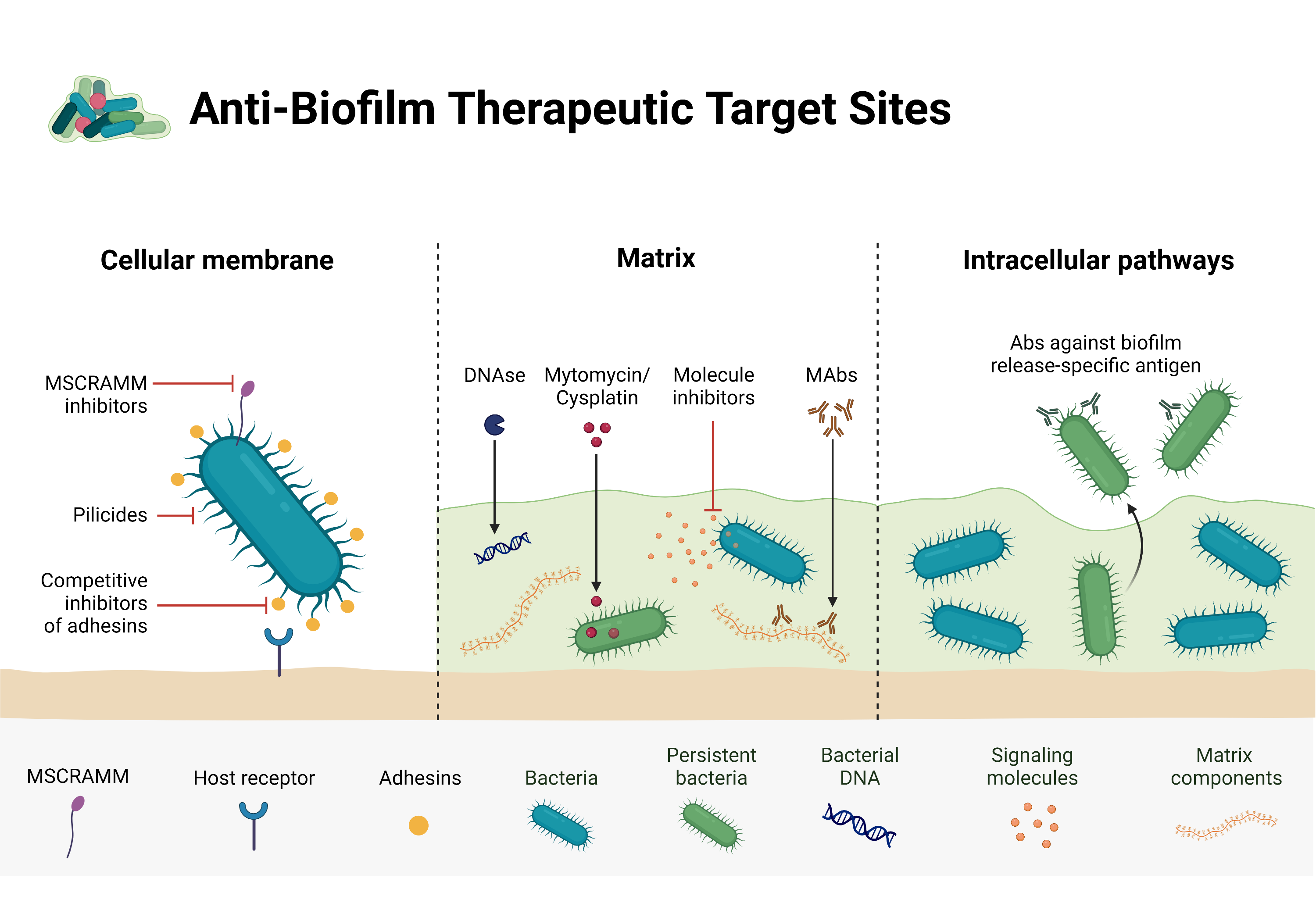
Antimicrobial resistance (AMR) has emerged as a grave threat to global public health, necessitating urgent attention and collective action. AMR occurs when microorganisms, including bacteria, viruses, parasites, and fungi, resist the drugs designed to treat them, rendering previously effective treatments ineffective. This phenomenon not only compromises the ability to treat common infections but also undermines the success of medical procedures such as surgeries, chemotherapy, and organ transplants. Multiple factors are responsible for antimicrobial resistance (AMR). One of the factors is that Biofilms play a significant role in the development and persistence of antimicrobial resistance. In Biofilm development, quorum sensing is a vital intelligence system that promotes invasion, infection, drug resistance, and pathogenicity. In recent research, different therapeutic proteins have been proven particularly efficient in treating biofilm-based infections. Proteases are reported to show inhibitory activity against biofilm formation without any effect on the viability of bacteria. Serratia protease is shown to have maximum antibiofilm activity against biofilm formation in all reported proteases. Research reports (Artini et al. 2015) also suggest that the biofilm dispersal activity of Serratia protease is not related to its protease activity but completely independent. These initial data from various research works indicate that the protein molecule could be the initial template for designing novel antibiofilm molecules. In this study, we are Utilizing domain-based segmentation; further structural and site-directed mutagenesis-based approaches could help us predict the exact segment responsible for the anti-biofilm activity. The identified part could further be engineered and screened for its enhanced antibiofilm activity against biofilms in vitro- in bacterial biofilm models (ESKAPEE). The outcome of the project would possibly be a new small protein-based molecule having potent antibiofilm activity but less immunogenicity (since it is engineered and smaller in size) and better than using proteases itself (broad specificity, adverse effects, blood dilation, and severe immunogenic responses)
Faculty Associated
Prof. Tapan K. Chaudhuri ; Prof. Bimal K. Das
Integrating the complete value chain for the torrefaction process for effective biomass valorization
The specific objectives are detailed below: 1) To design, fabricate, operationalize, and optimize the lab-scale torrefaction reactor for separation of hemicellulosic and cellulose + lignin fractions, and bio-coal production 2) To identify the best hydrolysis approach for maximum recovery of cellulosic fractions 3) To elevate the torrefaction process efficiency by seamlessly integrating high-value addition 4) To operationalize a 2 tonnes/day capacity pilot-scale torrefaction reactor for biomass valorization The main goal of the study is advancing the torrefaction process for practical and scalable biomass valorization through a comprehensive approach
Faculty Associated
Prof. Rohan Jain; Prof. Priyanka Kaushal
Production and valorization of 2-pyrones from biorenewable products
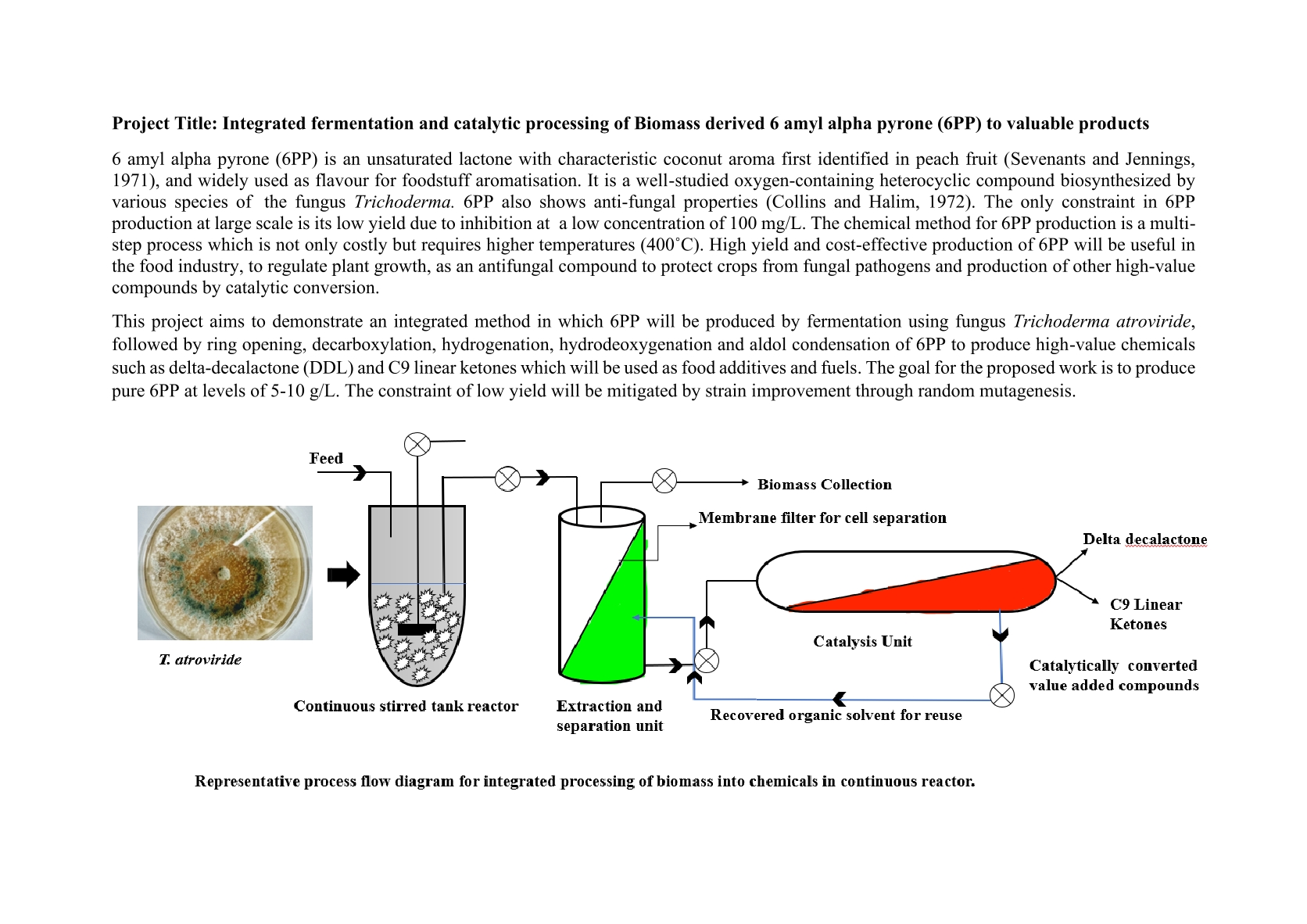
We are conducting the fungal fermentation to produce platform chemicals which can be used as feedstocks for the production of high value products
Faculty Associated
Prof. M Ali Haider, Prof. Atul Narang
Address
Room No. 002, Academics Complex East (99C),School of Interdisciplinary Research (SIRe),
Indian Institute of Technology Delhi, Hauz Khas, New Delhi, 110016